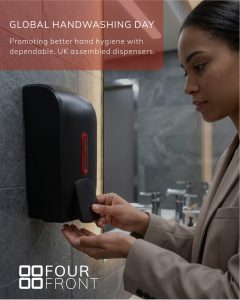
When equipping high-traffic commercial washrooms—whether for office complexes, educational facilities, or healthcare environments—selecting the right washroom hardware goes far beyond initial aesthetics. Facility managers, janitorial distributors, and cleaning contractors require dispensers that balance heavy-duty durability with supply chain flexibility.
However, traditional commercial supply models often force buyers into rigid minimum order quantities (MOQs), high upfront unit prices, and inflated spare parts costs that drive up total cost of ownership (TCO).
Here is what specifiers should evaluate when sourcing plastic and composite washroom dispensers—and how modern UK manufacturing is shifting the standard.
1. Supply Flexibility: Breaking Free from Rigid MOQs
For many janitorial suppliers and facility management teams, tied-up working capital is a constant challenge. Traditional washroom hardware suppliers frequently mandate high minimum order thresholds.
Sourcing from agile, UK-based assembly hubs allows distributors to purchase exactly what they need:
- Single-Unit Purchasing: Access competitive pricing on single units without being locked into bulk warehouse storage.
- Rapid Dispatch: Avoid multi-week international freight delays with next-day mainland UK delivery straight to site.
- Cash-Flow Protection: Order to match immediate project requirements rather than holding excess inventory.

2. Fair Pricing Across Every Tier (Without Volume Penalties)
A common frustration in commercial procurement is price disparity. On core hygiene hardware—such as 1L liquid soap, foam soap, and beaded hand-wash units—unit costs can vary drastically depending on supplier volume tiers.
Modern washroom hardware ranges, such as the FourFront HALO line, are structured to offer volume-level pricing right from the first carton. By streamlining UK assembly and eliminating excessive supply chain markups, commercial buyers can achieve 30% to 60% savings on soap hardware compared to traditional market alternatives.

3. Sustainable Support: “Repair Over Replace” vs. Disposable Hardware
When a dispenser pump wears out in a busy washroom, replacing the entire unit creates unnecessary plastic waste and inflated maintenance costs. Unfortunately, some hardware models are paired with spare pump pricing so high that replacing the full unit becomes the only option.
A sustainable washroom strategy prioritises modular repairability:
- Accessible Component Pricing: Replacement pumps, reservoirs, and window inserts should be priced fairly to extend hardware lifespan.
- Zero Landfill Commitment: Keeping core dispenser housings on the wall longer supports corporate ESG and sustainability mandates.
- Simple Maintenance: Standardised component fittings allow facility teams to service units in seconds.

4. Custom Branding That Doesn’t Extra Cost
Adding distributor or janitorial branding to washroom hardware creates strong brand recall and recurring chemical sales. Yet, setup fees and high print minimums often put custom branding out of reach for medium-sized projects.
Specifying hardware that includes Free of Charge (FOC) custom pad printing at carton quantity ensures your brand stays front-and-centre in every client washroom without adding overhead to the project invoice.

Upgrade Your Commercial Hardware Portfolio
Looking to optimise your washroom hardware margins or benchmark build quality against your current supplier? Speak with the FourFront team in Preston today to request sample units, technical specification sheets, or volume pricing schedules:
- 📞 Call: 01772 621260
- 📧 Email: sales@four-front.co.uk
- 🌐 Explore the HALO Range: www.four-front.co.uk
More than a dispenser.